
AUTHORS NOTE: At the time of writing, womxn was used as an appropriate and inclusive term to include all women and non-men identifying people. Since publishing, sentiments have changed over the use of alternative inclusive language. The blog has been edited to reflect this shift.
Over the past few decades, women have made leaps and bounds towards equality with men. Increasingly, women can be found in board rooms, in leadership roles and are generally more visible in the workplace compared to decades past. The 1984 Sex Discrimination Act has made sex discrimination and sexual harassment in public life within Australia against the law. While this Act has helped make progress for women, they still experience inequality and discrimination in many aspects of their lives. This ongoing discrimination can limit opportunity and choice for women, especially in the workplace.
One industry that suffers from gender imbalance is the coffee industry. While coffee is a product many of us consume and enjoy daily, this industry has a dark underbelly. It is rife with all kinds of inequality and discrimination issues, with many of these issues well documented; ethical sourcing issues, exploiting vulnerable and impoverished communities, and issues with environmental sustainability all occur within the growing sector.
What is less well documented is the struggle of women working in roles in developed and privileged economies. The general perception amongst the public is that women have relative equality with men, especially in award-based minimum wage jobs such as barista jobs and other hospitality roles. However, women still face an uphill battle to be recognised as fully equal with their male peers, and be recognised and rewarded for their talent and expertise. Often, this battle is downplayed or overlooked; many argue that there are worse cases of gender-based discrimination and inequality elsewhere. While that may be true, discrimination is still discrimination, and all discrimination is unacceptable.
What is going wrong?
A quick note on the growing industry…
While this article primarily discusses gender inequality within roles in the developed economy context, it would be a disservice to not briefly touch on the growing sector, which has blaring issues with gender inequality. According to an insight report from the International Coffee Organisation, 20-30% of coffee farms are female-operated, and 70% of the labour associated with coffee production is provided by women. The same report also found that in this sector, women have systemically restricted access to resources resulting in gender inequality in economic outcomes. While issues in these sectors are incredibly important, they are well documented, and there is a wealth of data available on these issues. Additionally, these issues have a wildly different context and severity to instances of gender inequality in other sectors within the coffee industry, and both deserve and require their own space to be examined and communicated.
Where are all the women?
Representation is a critical issue within the coffee industry at large.
In the workforce, women are paid less and have less opportunity for career progression. In the US in 2020, women in the food and accommodation industry make 87 cents for every dollar a man makes. That’s a 13% difference, and it’s a similar case in other western economies like Australia. The Australian gender pay gap in the food and accommodation industry was 11.8% over 2018-19. Women are over-represented in minimum wage roles, and there is both conscious and unconscious discrimination and bias in hiring and pay decisions regarding women. The gender pay gap is a direct symptom of the larger problem with women’s representation in the workforce.
The most significant barrier to equal pay is equal opportunity. Women are less likely to hold positions of power or leadership in the workplace. In 2019, women represented just over a third (36.7%) of all managers in Australia. When women are denied fair representation in leadership roles, it can put them at risk of reduced job stability, harassment and discrimination are increasing. Disempowerment of women in the workforce is not isolated to the coffee industry, but it is prevalent.
The burden of childcare and family rearing is one that weighs heavily on women. Women are constantly over-burned with household responsibility, and this impacts their visibility in the coffee industry.
Carolyn, Director and Editor for The Barista League Online (more on that later), remarks that, in her personal experience, the visibility of women is often tied to whether they have families or run households. “I think there’s a lot to do with the fact that, statistically, there are fewer women who are in a financially viable position to own a business. I remember saying to someone once, how many women do you know who work in the (coffee) industry, who have children, who have kids, especially at a barista level or even like as a head barista or manager level. I don’t know anyone working in that level that has children at all. And in general, of women who I know who are in higher-up positions, I know of two that have children, they both own roasteries. There are the only two that I know who have kids out of, everyone that I’ve met. Although, I’m probably forgetting someone, maybe hopefully. That’d be nice.”
“So many of the amazing women who are in the industry who are so visible, are single or they don’t have that kind of child responsibility or some of the same responsibility that comes from having children, having a family. It’s kind of an invisible aspect of the industry and something that I think people don’t even look at or sort of realise. Therefore, you kind of have this lack of visibility, lack of accessibility. It’s kind of this circle that keeps going around and around all the time because we don’t see it. We don’t think about it. It’s pushed to the back of people’s minds.”
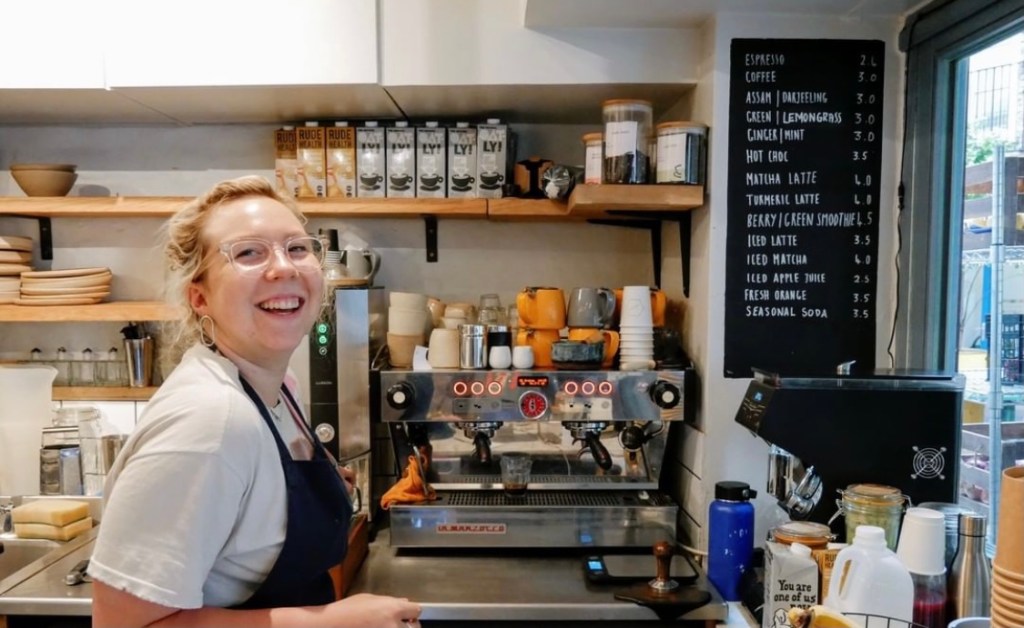
Briana, lifelong hospitality worker and former barista, echos this sentiment. “Literally in an interview, I was asked if I planned on having more kids. I also believe I missed out on positions in the past because I have young children.” Briana is a mother of 4, with the oldest being 4 years old. While children have ultimately have brought her immense joy, there are challenges that come with them. “When I fell pregnant with the twins, I felt as though I couldn’t tell my bosses or I would lose my job. They didn’t hold the position for me to return to, and expected me to voluntarily step down.” Women face issues like Briana’s frequently, despite there being laws in place to protect women and prevent situations like hers occurring.
Representation on the World Stage
On the world stage, there is also a lack of representation. 2018 was the first year a women won the World Barista Championship in its then 18 year history. 2019 saw another win, but prior to this, women’s representation in the competition scene was (and still continues to be) incredibly disproportionate to men. In 2018-19, the winners were the only women competitors in their respective finals. In the year’s 2009-2017 only two women made it through to the finals (out of 6 available spots each year); Miki Suzuki of Japan (2017, 2012, 2011) and Charlotte Malaval of France (2015, 2016).
Pointedly, the World Brewers Cup fares not much better; in its 9 years of competition, only one woman has taken the title, in 2018. As men dominate coffee leadership, so too do they dominate coffee roasting. While commonly talked about within coffee people circles, there is very little data about women in coffee roasting. However, we can again look to the world stage to find evidence of this. The World Coffee Roasting Championship, founded in 2013, has never had a female champion.
The reason for the lack of female representation in competition is unclear. Are women less likely to qualify and if that’s the case, is it an indication of judging bias or fewer resources? If women are equally likely to make it through to finals, and therefore the lack of representation is caused by a lack of competitors, why does this happen? Is it down to the marketing of competitions? Is it because women are culturally conditioned to be less competitive, or is it again a lack of access to training and resources? Likely it’s a combination of all of the above. The odds are stacked against women.
Carolyn agrees. Working in the coffee industry as both a barista and on coffee editorial work for years, Carolyn has seen first hand the struggle with accessibility the coffee competing industry experiences. “Competing is very much a boys club, and it’s hard to get into unless you know the right people. I have a lot of friends who come who compete and they’re great, but there’s a whole competing community that’s big clique within that space, and that is very hard to penetrate if that’s not your interest area or you’re not introduced in some way.”
Harassment and Casual Sexism
Historically, women’s safety is a widely documented issue. A 2017 survey of the hospitality union (of which 90% of the respondents identified as female), found that 90% reported sexually harassed in the workplace. To those in the industry, this comes as no surprise.
Ruby, a former coworker of mine, knows this too well. “I would get verbal sexual harassment or unsolicited comments regarding my looks or the way I present myself.”
Ruby’s experience is not unique, as Briana explains. “Once, a manager asked me if he should buy Woman’s Day magazines to show me how to style my hair and makeup, insinuating I should play up ‘the looks’ as a young female to assist with sales.”
Briana has also faced other instances of casual sexism in the workplace. “I had higher expectations from male managers expecting me to be able to make more coffees than other staff could due to being a young female.”
There is an unfounded expectation of women, especially young women, to be agile and quicker than others in the workplace. They are expected to be efficient servers to their male managers’ goals. Generalisations aren’t isolated to women, men often face the equally wrong suggestion that they are always physically strongest in their team, but generalisations about men often work to their advantage.
Unsurprisingly, Carolyn has faced casual sexism through her time in the industry. One particular memory sticks out for her.
If one identifies as a BIPOC woman, the odds stack even higher than compared to their caucasian counterparts. In Australia, the gender pay gap most adversely affects BIPOC womxn. Racial or religious identifiers make minority women more visible, and therefore increases the risk of harassment. Ruby is of Vietnamese descent, and would often have to field unsolicited queries and opinions about her perceived ethnicity from customers. “I had unnecessary comments from customers attempting to guess my ethnicity or like my accent and how that contributes to my ethnicity It didn’t really bother me too much, it was just a bit annoying to have to always decline or reject these kinds of questions and then dealing with them being offended or too intrusive.”
When asked if she thought that being female-identifying and presenting contributed to the level of inappropriate questions regarding her ethnicity at work, she vehemently agreed. “Personally from me, and speaking for myself, absolutely. It’s like dude, I just work here, I have to be nice to you! It gets tedious and inappropriate, I just want to do my job in peace.”
The general consensus is that LGBTQIA+ people experience higher levels of adversity in the workplace than their straight identifying counterparts, though research is limited on this. It varies widely depending on the country, as laws surrounding LGBTQIA+ vary. It goes without saying that women who identify as both BIPOC and LGBTQIA+ suffer uniquely.
Hear our Voices, Take us Seriously
Women within the coffee industry often face challenges when trying to be taken seriously as compared to their male counterparts, as Carolyn explains.
Women also find their voices being lost in a sea of men, albeit many times unintentionally.
Carolyn also finds that sometimes her opinion, despite being a trained and successful professional, just doesn’t matter to the men she works with.
What is being done about gender disparity in the coffee industry?
The best way to fight sexism and gender inequality in the workplace is increased representation of diverse women at all levels of industry as well as representation of diverse women in leadership and policy-making levels.
As they say, every ripple begins with the first drop. Independent organisations are standing up to tackle the issues of sexism and underrepresentation in the coffee industry.
The Kore Directive is a UK based networking group for women coffee professionals, helping bridge the gap caused by a lack of female representation in professional and leadership roles within the coffee industry. They aim to open accessibility for women to all aspects of the coffee industry, such as cuppings and competing.
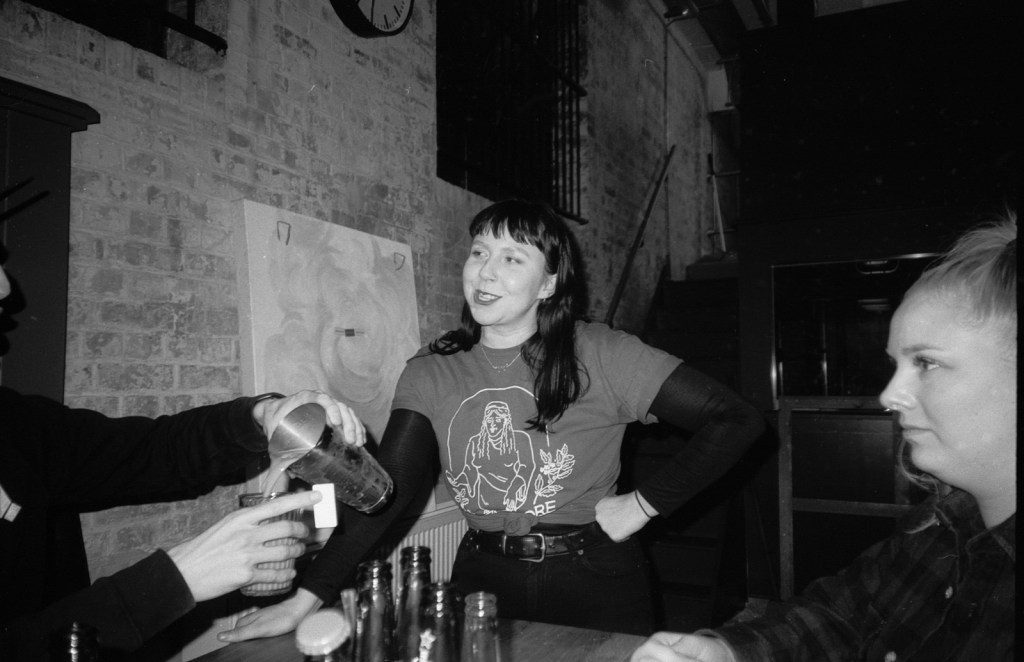
Founded in 2018, they are a not-for-profit organisation that, pre-COVID, are primarily events based. Adapting to the current climate, Kore has moved to regular Zoom meetings for their members as well as establishing a Discord server to encourage communication through their network despite events being cancelled.
Carolyn, one of the co-founders of Kore, tells me about how The Kore Directive got off the ground “Sierra, who’s the main co-founder essentially, saw that there was a space within the industry, especially in Europe. There was a lack of equality within the industry, and she really wanted to do something that championed women within the industry. Anyone who is self-identifying with women, but also making it a space where people who went who weren’t identifying as women could come and support and be involved and contribute to the conversation as well.”
The Kore Directive are careful not to alienate their allies. As Carolyn states, “We wanted to make sure that there was a strong presence of identifying men there as well, because obviously within the industry, it is so male dominated that we wanted to have that presence and for women to still feel like they could learn and be involved with men. We didn’t want to contribute more to that segregation. Men in the industry do have a lot to share and a lot to teach as well.”
Carolyn is immensely proud of the work they have done and the community that they have established. Amongst her favourite work is a panel on mental health and coffee, as well as a successful zero-waste latte art competition. Speaking about the competition.
As mentioned above, The Barista League is another organisation that aims to close the gap in terms of accessibility to coffee events and competing, though with a less gendered focus. Founded in 2015, The Barista League hold community-driven events that promote accessibility.
They, like many others, have had their 2020 plans derailed thanks to COVID but this birthed a new avenue for them to explore; ‘The Barista League: Online’.
The Barista League has helped other accessibility movements off the ground; Steve Moloney, who runs The Barista League mentored Sierra Burgess-Yeo of The Kore Directive. Carolyn tells me, “Both Kore and The Barista League cross-correlate a lot. They’re looking for education, diversity. Kore has more gendered kind of background, but both are kind of really carving this way within the industry where there are consistent conversations around diversification on all levels and standing up, especially for baristas.”
They aren’t the only organisations working towards equality and increased representation of minority groups. Glitter Cat is an organisation working with marginalised groups such as BIPOC, LGBTQIA+, women, and persons with disabilities, to take up more space in the speciality coffee industry. Their boot camps, all-expenses-paid coffee competition training programs, work to remedy shortcomings in the coffee competing space and encourage more diverse representation at competitions. Glitter Cat also runs an accountability program for businesses, challenging retail coffee companies to implement anti-racism policies in hiring, operations, and cafe experience. Girls Who Grind Coffee (GWGC) are an all-female coffee roastery located in Somerset, England. They champion women producers, sourcing exclusively from female-led farms. On top of paying a premium to producers, GWGC also ensures 10% of the sale price from all their retail bags of roasted coffees goes back to the producer as part of their Cheek to Cheek initiative.
It’s not just individuals or small groups fighting the good fight in the name of equality. Multinational corporations, like Starbucks, are supporting their baristas, providing industry-leading coffee education and sponsoring baristas to attend competitions.
Despite progress, there is far more work needed for women to get even close to parity with men in the coffee industry. It’s not just the coffee industry that requires work, the World Economic Forum reports that as of 2020 full economic equality for women with men will take 257 years. Alarmingly, this figure is significantly up from the 2016 estimate of 170 years.
As an industry, gender inequality should not be accepted. Increased representation, agency, and better pay needs to be achieved until it is in line with that of men. By better understanding and reporting on the challenges and adversity faced by women at all levels of the industry, we can better tackle the issue of gender inequality head-on. Only when we understand a problem can we work against it. Equality will be achieved when people are able to access and enjoy the same rewards, resources and opportunities regardless of gender.
If you’d like to see more of Carolyn, you can find her @ http://carolynwest.com.au
 Jessica Lee Canty